Showing posts with label dental hoses. Show all posts

Basic Tips to find a Better organized Dental Care Regimen

Tuesday, 10 September 2013

Your poor dental care regime can lead to various serious conditions ranging from cavities and tooth decay to Periodontitis, Gingivitis and permanent loss of teeth. Fortunately, a well organized dental care regimen and regular cleaning of teeth can keep most of these problems at bay.

Poor Dental Care and its Problems
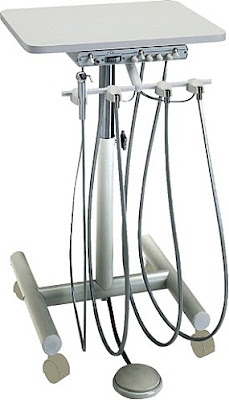
3HP AUTOMATIC DOCTOR'S CART

Not cleaning your gums and teeth everyday can lead to a risk of their decay. The earliest signs of tooth decay include pain while biting into food, visible gaps or holes in your teeth and increased sensitivity—which leads to bleeding and pain in the mouth cavity. It is important to wash your mouth after every meal and rinse it clean of the smallest particle of food consumed by you. The carbohydrates present in the ingredients used for preparing your food and drinks provide the breeding grounds for bacteria which cause cavities.

These bacteria are capable of forming plaque on teeth, well within 20 minutes of consuming your meals. This makes it all the more important to brush your teeth more than once—especially if you are obsessed with frequent snacking and love to eat food rich in high carbohydrates like chocolates or ice creams. It is good to remember that bacteria exists your mouth cavity at all times and therefore it is necessary to cut down on sugary foods and indulge in frequent cleaning processes. This goes a long way in preventing teeth decay.

Recommended Routine for Dental Care

You must strive to keep your teeth and clean and free from any cavities by following a simple dental care regimen of twice-daily flossing and brushing. Regular visits to your dental clinics and dentist is essential for assessments of any signs and symptoms of mouth diseases and professional cleaning. For best results, you must also use the oral rinse, dental floss or toothbrush recommended by your dental expert. An increase in the usage of technology and dental tools has made it possible for dentists to offer high quality services, prompt results and painless sessions for patients in their clinic.

The New World of Dentistry

The new range of dental equipments, tools, components, dental mobile units, dental hoses and tubes and so forth, have laid the foundation for more beneficial services linked to dentistry. They are well equipped to provide more efficient management of your time and resources and make visits to the dental clinic less cumbersome and fearful. Dental chairs and clinic environments have also become more bearable, pleasant and comfortable with the use of latest equipment and new anesthetics—leading to accuracy, precision, predictable good dental health and valuable collaborations with your dental team.

Advancements in research, techniques and treatment processes along with an increasing number of young and enthusiastic dentists have made the dental care profession achieve better smiles—and in more ways than one.

Equipments all Dental Assistants must be Familiar with

Thursday, 27 June 2013

As a dental assistant, you will be expected to help other dentistry experts in the office, laboratory and other environments which demand patient care. Duties such as disinfecting, sterilizing, pre procedure preparations and bringing out of relevant dental tools and equipments are some of the primary duties a dental assistant will be expected to conduct.
Over and above this, if you are skilled enough, your dentist may also allow you to assist him or her in some procedures. However, if you wish to truly make an impression and progress in this field, it is important that you familiarize yourself with some of the following equipments and materials that you will be expected to use on a routine basis.
  1. Air-Water Syringe
As the name suggests, this particular piece of equipment helps bring in air or water, or both into the mouth of your patient. As a dental assistant you may be expected to use this when you need to wet a particular area of a mouth; to wash out the area after a particular procedure; or to clean away all debris and fluids so that your dentist can continue doing his work.
It is most often employed when the patient starts to bleed and the assistant will need to wash away the blood. This syringe typically consists of a controller head that helps you manage the injection of air and water alternatively or both together at the same time. These syringes are typically connected to dental hoses which are in turn connected to containers that consist of pressured air, plastic and water. They come with removable tips that essentially go into the mouth of the patients.
  1. Saliva Ejectors
This ejector is essential a dental vacuum hose that helps dental assistants to suck out the saliva from the mouth of a patient. Since the patient is not able to close his or her mouth while the dentist is working, swallowing becomes difficult. These vacuum dental hoses help assistants in getting rid of the accumulated saliva which builds in the mouth and hinders the work of dentists.
As a dental assistant, you will make use of these ejectors to make sure the dentist and comfortably continue working on a patient. These dental hand piece hoses also help in removing water, blood and other fluids from the mouth of the patient.
  1. High-Volume Evacuator
Similar to a saliva ejector, this particular equipment is used to remove larger debris such as chipped pieces of your teeth, and other objects that have a chance of falling into the mouth of the patient in the due course of the procedure.
In addition to this, you may also be expected to gain familiarity with equipments and tools specific to the nature of practice that you are assisting.